


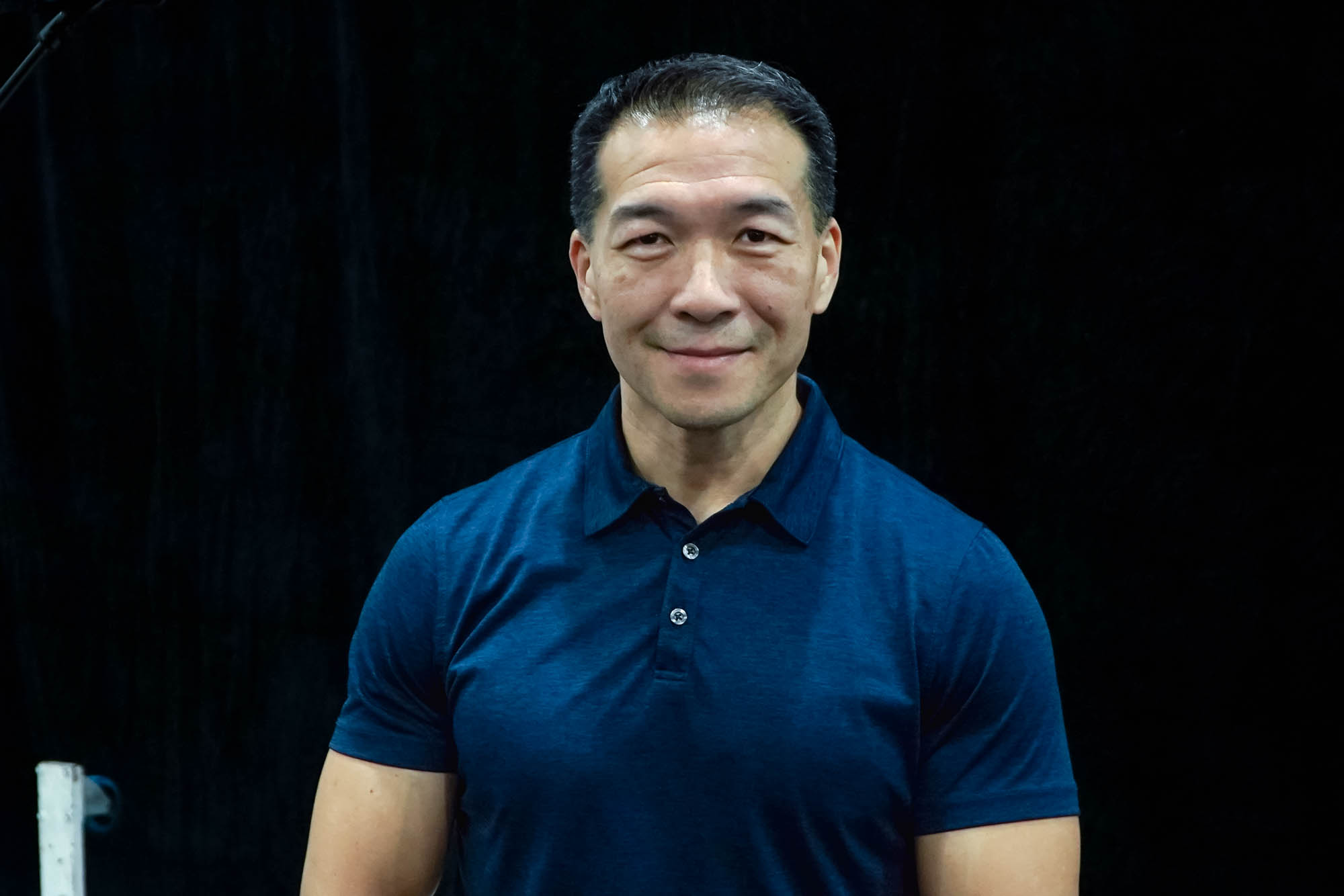
This year’s ANNUAL PARKINSON SYMPOSIUM in JANUARY HOSTED BY NEURO CHALLENGE FOUNDATION FOR PARKINSON's featured special guest Jimmy Choi, celebrated American Ninja Warrior competitor and Parkinson’s advocate. Choi, who uses his platform to inspire and empower others with Parkinson’s, discussed his personal journey of living actively with the disease.
In addition to his symposium presentation, Choi graciously took the time to share his thoughts with our readers.
 Can you take us back to the moment you were diagnosed with Parkinson’s? What was going through your mind at that time?
JIMMY CHOI I didn't start my road to diagnosis because I wasn't feeling any symptoms. I was told that I was exhibiting traits of a person with a neurological disorder during an insurance physical. The nurse came in and noticed my dilated pupils—one was different from the other. She ruled out drugs and alcohol and she had me get up and move and do certain movements. I thought it was the strangest physical I'd ever done for insurance. And then she said to me, “I work in a neurology office in the daytime and I'm seeing things about you that are very familiar to me, so I encourage you to go and talk to your doctor about this.” At that time, I was in my 20s. Everything that I was feeling could be explained away by everyday life—stress at work can cause twitches and stiffness can be common. I led a fairly active life and being stiff and rigid comes with activity. Finally, I talked to my general practitioner and we just started with specialist after specialist—neurology, orthopedics, you name it. It wasn't until I met with a movement disorder specialist and she took one look at me after three minutes and said, “Jimmy, you have Parkinson's.” It was about eight months between the time that I was told that I should check this out, until the time that I was given my actual diagnosis and I just remember I was in so much shock. I think I got angry immediately at the diagnosis and I may have even sworn. It was like a sock in the gut. I just remember leaving her office that day with pamphlets, thinking I would never even read them. I immediately went into denial.
Before American Ninja Warrior, what did Parkinson’s change most about your daily life—and how did you respond to that change? During the first eight years, the symptoms really progressed. I started to lose my balance and my gait was affected. Because it was progressing slowly, my body was making adaptations to my new normal every day. I didn't think I felt it, but it got to the point where I was falling over so much that my wife said, "You’ve got to use a cane.” By six years in, I was walking with a cane. I became so inactive and because of my profession—I was in the tech industry working 18 or 19 hours a day, eating junk or whatever was available—I gained a lot of weight. When I hit about 250 pounds, I needed help moving. I started to think that's just how life was going to be for me. But my friends and family who hadn’t seen me in a while looked at me and said, "Holy crap, Jimmy, what happened to you?" At that time, nothing about American Ninja Warrior, running a marathon or doing anything active was in my head. I was just trying to survive. I was just trying to get as far as possible in my career, make as much money as I could so that my wife and my family wouldn’t have to worry about me financially in later years. I essentially adopted the idea that I was going to be in a wheelchair by age 45.
Competing on American Ninja Warrior is challenging for anyone—how did Parkinson’s shape the way you trained and competed? When I first started to get myself into shape, it had nothing to do with American Ninja Warrior. I actually started just by walking, jogging and running. I built myself up over the years to the point where I could run a marathon and I just kept pushing myself. I went from one marathon to two to three to four. And next thing you know, I was learning how to use exercise as a balance along with my medication and my nutrition—living the best I possibly could with Parkinson's. It wasn't until my daughter dared me to apply for American Ninja Warrior. She was competing in the kids circuit at the time. So I applied and along with the application, you needed to not only tell your story but also show that you're physically capable of doing some of the things. I barely made the minimum so when they called me, it was a big shock and it jolted me into the next level. They told me I had four weeks to prepare for my first time on American Ninja Warrior and so I turned to my daughter for help. She brought me to her coaches who taught me that competing requires a lot of body awareness. They helped me understand how my body moves in space to get across obstacles. In those first four weeks, it was like drinking water out of a fire hose, trying to cram training in. But after my first competition, I got hooked because it was so much fun. It was challenging and it taught me how to move and better balance my body in the gym, which translated to everyday life—avoiding obstacles, like Lego blocks on the ground or tripping over the dog—all those are obstacles in life.
Were there moments during competition or training when Parkinson’s felt especially challenging? Stress elevates Parkinson's symptoms. When you're training, you get used to it and the stress level comes down and it just becomes repetition, but then when you get up on the stage and you have people cheering and cameras and lights—all these things put a lot of stress on the system. After my first time competing, I thought I had complete control over my tremors and my body. But I realized under all that stress, I didn't have that. So going into my first year, I fell on a balance obstacle and because of that experience, when I continued to train, I would put myself into unfamiliar territories in a controlled environment—safe with my coaches, with plenty of padding around. I also started going into more regional competitions so that I could get used to that stress level being elevated and I always upped the stakes, so to speak, when it comes to training. There's always that element of fear that raises my anxiety levels, which will elevate my symptoms. I’ve now competed a total of seven times at American Ninja Warrior. I've finally started to learn how to handle stress as it relates to Parkinson's symptoms in my body. I've learned grounding and breathing techniques that help me calm my own nervous system. The symptoms never go away, but it allows me the feeling that I'm in control despite elevated symptoms. It doesn't always pan out on the show because you get one shot. Living with Parkinson's and my confidence in moving around with my family has greatly improved because of the training that I've taken on with American Ninja Warrior.
What would you say to somebody who's newly diagnosed and is feeling very overwhelmed and fearful about exercising? What I always tell people is that once you have your diagnosis, the first thing that you have to do is find your new base. Go and work with a professional—whether it's a physical therapist, a trainer, or an occupational therapist—just go and work with a professional in a very controlled and safe environment. Don't try to do it on your own—you don't want to risk injury. Your goal is not necessarily to always improve on that base, but to stay at least at that base over the years, because remember, we're living with a neurodegenerative and a progressive disease, which means as the disease progresses, if your base is staying the same, you're making gains. It doesn't always have to be leveling up to the next level. It's easier to build discipline and routines for the future from that point.
How do events like the Neuro Challenge Foundation Symposium help strengthen the Parkinson’s community? When I was diagnosed, there was a lot of shame and embarrassment that came along with the diagnosis. There was a stigma because of how little the public knew about Parkinson's. Everybody looked at me, thinking maybe I was drunk. Sitting on an airplane, I would have tremors, and people wouldn't want to sit next to me. So, I thought it was important for me to raise awareness, not just for those living with Parkinson's, but if you look at my social media platforms, I'm really talking to the general public. If I can somehow help the public have a better understanding, there will be less shame, less embarrassment for the person living with Parkinson's. And at the same time, if I can show my abilities and if that can help another person with Parkinson's also learn how they can help themselves, then that's great as well. At the end of the day, I want the next person to have less isolation from embarrassment and if they're more comfortable being out in public, there's more opportunity for them to go to training, therapy and to live life.
If you could leave our readers with one message today, what would it be? When it comes to living well with Parkinson's and people start giving advice about diet or lifestyle or treatments they’ve read about, I want people living with it to remember that the diagnosis has changed their life. Whatever it is that you're doing, I don't care if it's something in the gym or you're trying a new treatment or diet, you have to ask yourself the question of is this a lifestyle change? Is this sustainable for me? You've got to make good lifestyle changes so that you can learn how to deal with your new life. Doing the same thing over and over isn't going to help you if it didn't help you before. Find what you can to change that is sustainable and then make that change and if it doesn't work, change it up. It's just like people who yo-yo diet—if you do something and it's not sustainable and you give up on it, you're back to square one. So, make sure whatever it is that you're doing, give it a chance. Make sure that it is something that's a meaningful change for you. Don't do what Jimmy's doing. Do what works best for you.